



Ayumi Ayurvedic Face Mask Range
A weekly face mask does what a daily cleanser cannot: deeper absorption of actives, longer contact time with the skin, and a concentrated reset of the surface before the rest of the regimen takes over for the week. Our Ayurvedic face mask range covers three formulated masks plus a single-ingredient clay powder, each built for a different weekly job. The Turmeric & Vitamin C Glow Clay Face Mask is a brightening clay mask for dull skin and uneven tone, built on a mineral-rich Kaolin base with CO2-extracted Turmeric, Vitamin C, Papaya and Amla. The Sandalwood & Hyaluronic Acid Hydrating Face Mask pairs Pink Clay with Hyaluronic Acid, Shea Butter and botanical oils for dry, dehydrated and sensitive skin that needs a hydrating face mask rather than a drying one. The Deep Cleanse Face Mask combines French Green Clay with Neem, Tea Tree and Zinc PCA for oily, blemish-prone and acne-prone skin. And our Multani Mitti Clay Powder is 100 per cent pure Fuller's Earth for anyone making DIY face masks in the traditional Indian way.
Match Your Skin Need to the Right Face Mask
| Your Skin Need | The Face Mask | Key Ingredients | How It Helps |
|---|---|---|---|
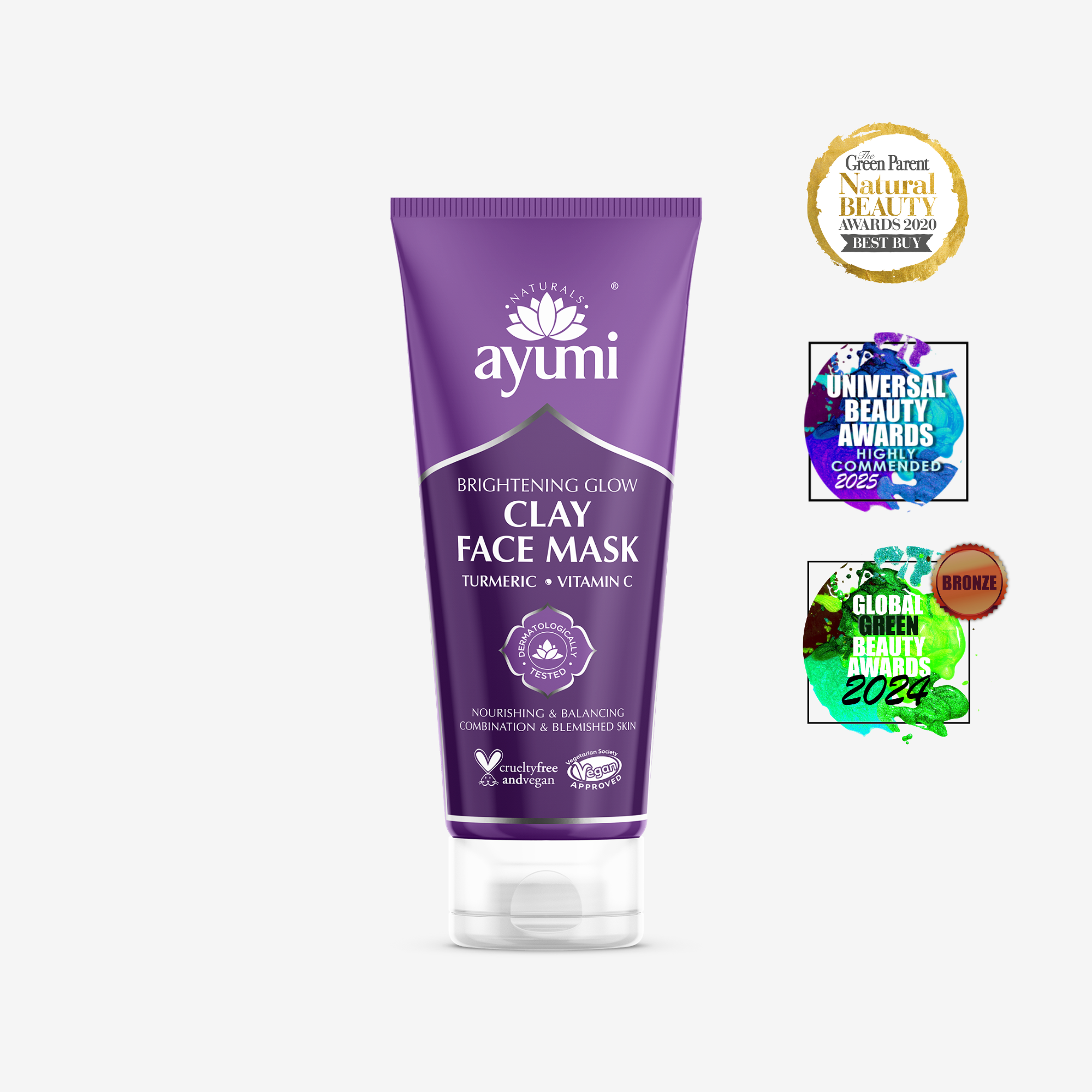
| Dull skin, uneven tone, a face mask for glowing skin | Turmeric & Vitamin C Glow Clay Face Mask | Mineral-rich Kaolin Clay, CO2-extracted Turmeric, Vitamin C, Papaya Enzymes, Amla Extract | A brightening face mask and turmeric face mask in one. Helps purify, gently exfoliate and reveal a smoother, more radiant-looking complexion. Dermatologically tested, vegan and made in the UK. Awarded Bronze at the Global Green Beauty Awards 2024 (Best Natural Face Mask) and Best Buy at the Green Parent Awards 2020. |
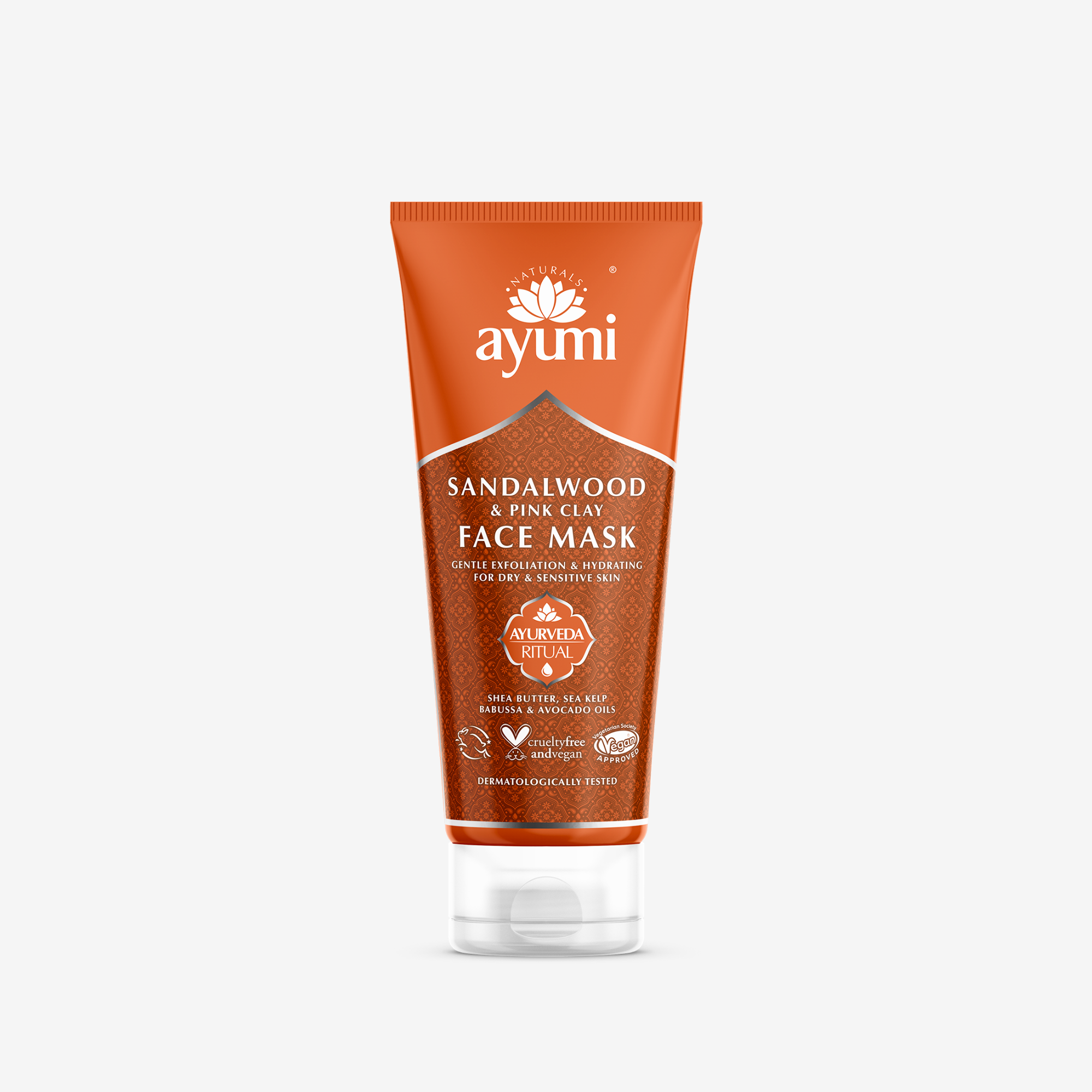
| Dry, dehydrated or sensitive skin needing a hydrating face mask | Sandalwood & Hyaluronic Acid Hydrating Face Mask | Kaolin Pink Clay, Hyaluronic Acid, Sodium Hyaluronate, Shea Butter, Ginger Root Extract, Babassu, Avocado, Jojoba, Sandalwood Oil | A hyaluronic face mask on a gentler Pink Clay base, finished with rich botanical oils and Shea Butter. Draws away impurities while deeply replenishing moisture. Awarded Highly Commended at the Universal Beauty Awards 2025 (Best Face Mask for Clear Skin). Contains Sandalwood Oil, so patch test on your inner arm before first use. |
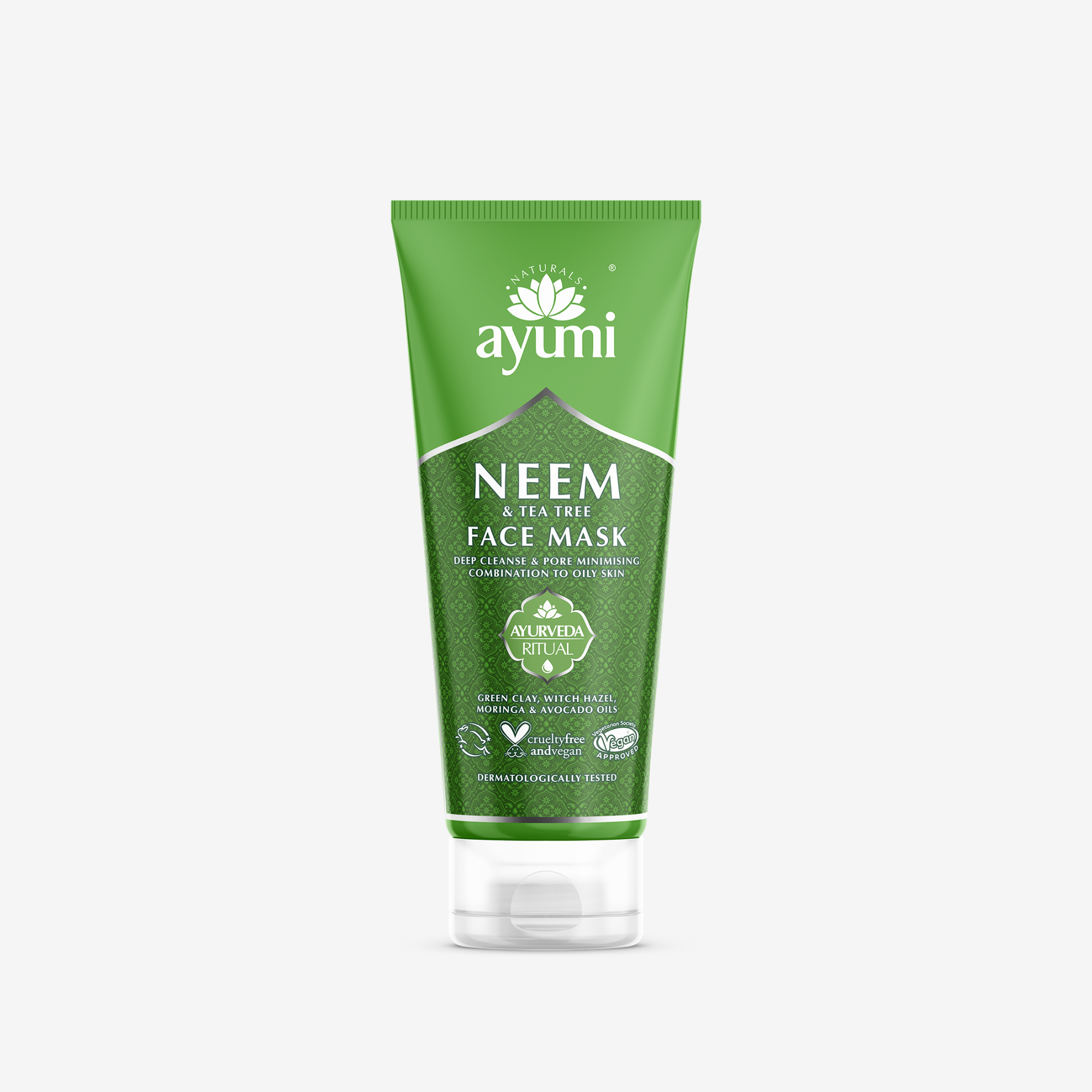
| Oily, blemish-prone and acne-prone skin needing a deep cleansing face mask | Deep Cleanse Face Mask for Oily & Acne-Prone Skin | French Green Clay, Neem, Tea Tree Oil, Zinc PCA | A deep cleansing face mask that pairs French Green Clay for drawing out impurities with Neem and Tea Tree for Ayurvedic antimicrobial support, and Zinc PCA for a calmer appearance of blemish-prone skin. Dermatologically tested, vegan and made in the UK. Contains Tea Tree, so patch test before first use. |
| A pure clay powder for DIY face masks | Multani Mitti Clay Powder for Face Masks | 100 per cent Pure Multani Mitti (Fuller's Earth), triple-sieved | A single-ingredient Ayurvedic clay traditionally used across India for deep-cleansing face masks. Blend with rose water, yoghurt, honey or other powders for DIY face mask recipes. Helps absorb excess oil, lift impurities and leave skin feeling clean. |
Why Choose Our Ayurvedic Face Masks
- Three award-recognised face masks across the range. Our Turmeric & Vitamin C Glow Clay Face Mask was awarded Bronze at the Global Green Beauty Awards 2024 (Best Natural Face Mask) and Best Buy at the Green Parent Awards 2020. Our Sandalwood & Hyaluronic Acid Hydrating Face Mask was awarded Highly Commended at the Universal Beauty Awards 2025 (Best Face Mask for Clear Skin). Independent third-party recognition rather than brand marketing.
- Three clay bases for three different jobs. Most mask ranges use one clay for every mask. Ours uses three: Kaolin Clay in the Glow Clay Mask for gentle brightening, Pink Clay in the Hydrating Mask for a gentler hydrating pull, and French Green Clay in the Deep Cleanse Mask for the strongest absorbing action on oily skin.
- A full set of Ayurvedic ingredients across the range. Turmeric, Papaya, Amla, Sandalwood, Ginger Root, Neem, Tea Tree, Hyaluronic Acid, Multani Mitti. An Ayurvedic face mask range earns the name through named traditional ingredients across every formula, each matched to a specific skin need.
- Pure Multani Mitti for DIY face masks. Alongside the formulated masks, our Multani Mitti Clay Powder is single-ingredient triple-sieved Fuller's Earth, with nothing else added. For anyone wanting to make a traditional Indian DIY face mask, mix with rose water, yoghurt or honey to the consistency you want.
- Dermatologically tested where it is verified. Our Turmeric & Vitamin C Glow Clay Face Mask and Deep Cleanse Face Mask both carry a dermatologically tested claim on their product pages, and both are vegan and made in the UK. The Sandalwood & Hyaluronic Acid Hydrating Face Mask is a hydration-first formulation, and Multani Mitti is a single-ingredient Ayurvedic powder.
How to Apply a Face Mask Properly
A good face mask only works when applied correctly. The common face mask mistakes are letting the mask dry fully on the skin (which pulls moisture out), using too thin a layer, applying on dry skin that is not freshly cleansed, and using multiple masks in the same session on the same skin.
| Step | How Often | Why |
|---|---|---|
| 1. Cleanse the skin first | Before every mask | Masks need direct contact with clean skin. Apply after your face wash, with skin still slightly damp. A mask on top of makeup or sunscreen residue delivers almost no benefit. |
| 2. Apply an even layer thick enough to stay wet | Every application | A paper-thin layer dries too fast and pulls moisture from the skin. Apply thick enough that the mask stays visibly wet for the full 10 to 15 minutes. Use a brush or clean fingertips. |
| 3. Leave on for 10 to 15 minutes rather than until it fully dries | Every application | This is the single most common mask mistake. A clay mask left to dry fully pulls moisture out of the skin instead of into it. Rinse before the mask starts cracking or feeling tight. |
| 4. Rinse with lukewarm water, pat dry | Every application | Hot water irritates freshly treated skin. Lukewarm water removes the mask without stripping it. Pat gently rather than rubbing. |
| 5. Follow with toner and moisturiser on damp skin | Within 60 seconds | The 60-second window after rinsing is when hydrating ingredients absorb best. Do not wait until skin feels dry to apply the toner and moisturiser. |
| 6. Once a week for most skin types | Weekly frequency | How often to use face mask is one of the most asked skincare questions. For most skin types and most formulations, once a week is enough. The Deep Cleanse Face Mask can go up to twice a week on very oily skin. |
| 7. Multi-mask only if your skin truly varies by zone | When needed | Multi-masking (clay on the T-zone, hydrating on the cheeks) only makes sense if the two zones genuinely have different needs. Most skin does not. One mask applied properly beats two applied in a rush. |
| 8. Patch test every new mask | Before first full application | Masks sit on the skin longer than cleansers, so a reaction has longer to develop. Apply a small amount to your inner arm, wait 24 hours, then apply to the face. |
Ayurvedic Ingredients Across Our Face Masks
| Ingredient | What It Does in a Face Mask | Where You Will Find It |
|---|---|---|
| Kaolin Clay | A gentler mineral-rich clay used in our Turmeric & Vitamin C Glow Clay Face Mask. Suitable for most skin types, including sensitive, where stronger clays like French Green would be too much. | Turmeric & Vitamin C Glow Clay Face Mask |
| Pink Clay | A kaolin variant with a gentler pull on the skin, suitable for dry and sensitive skin where even standard clay would feel drying. The base of our Hydrating Face Mask. | Sandalwood & Hyaluronic Acid Hydrating Face Mask |
| French Green Clay | The strongest absorbing clay in the range. Suited to oily and congested skin that needs serious oil-absorbing action, which is why it anchors the Deep Cleanse Face Mask. | Deep Cleanse Face Mask |
| Multani Mitti (Fuller's Earth) | The traditional Indian clay used across South Asian skincare for centuries. Multani mitti benefits come from its mineral content and strong absorbing capacity. Available in our range as a single-ingredient powder for DIY face mask recipes. | Multani Mitti Clay Powder |
| Hyaluronic Acid and Sodium Hyaluronate | The hydrating backbone of our Hydrating Face Mask. Both hold many times their weight in water, which is how a hyaluronic face mask delivers deep hydration during the 15-minute contact window. | Sandalwood & Hyaluronic Acid Hydrating Face Mask |
| CO2-extracted Turmeric | A traditional Ayurvedic ingredient used for centuries for the appearance of dull or uneven skin. CO2 extraction keeps its natural compounds intact. The brightening workhorse in the Glow Clay Face Mask. | Turmeric & Vitamin C Glow Clay Face Mask |
| Vitamin C and Amla | A pairing in our Glow Clay Face Mask. Vitamin C is a naturally occurring antioxidant used widely in brightening masks. Amla is the Indian gooseberry, naturally rich in vitamin C and bringing an Ayurvedic ingredient story. | Turmeric & Vitamin C Glow Clay Face Mask |
| Neem and Tea Tree Oil | Two of the most researched antimicrobial ingredients for blemish-prone skin. In our Deep Cleanse Face Mask, they pair with Zinc PCA and French Green Clay for a classical and modern antimicrobial story. | Deep Cleanse Face Mask |
| Zinc PCA | A dermatology-friendly form of zinc that supports a calmer appearance of oily and blemish-prone skin and helps regulate the appearance of oil production. | Deep Cleanse Face Mask |
| Shea Butter, Avocado, Jojoba and Babassu Oils | A quartet of rich botanical oils and butters in the Hydrating Face Mask, nourishing the skin barrier through the 15-minute contact window so the mask delivers hydration rather than drawing moisture out. | Sandalwood & Hyaluronic Acid Hydrating Face Mask |
How to Choose the Best Face Mask for Your Skin
- Match the clay to your skin. French Green Clay suits oily and congested skin year-round. Kaolin suits most skin types. Pink Clay suits dry and sensitive skin. Using the strongest clay on skin that cannot handle it causes most mask-related reactions.
- Named ingredients and award recognition. The best face mask tells you what is in it on the product page, and ideally has independent third-party recognition. Two of our three formulated masks carry 2024 or 2025 awards.
- Hydrating formulation for dry or reactive skin. If your skin reacts to clay masks or feels tight after any mask, choose a hydrating face mask with Hyaluronic Acid, Shea Butter and botanical oils rather than a drying clay-only formulation.
- DIY if you want full control over ingredients. For anyone who wants to control every ingredient themselves, a single-ingredient clay powder like our Multani Mitti is the starting point for DIY face mask recipes.
- Pair the mask with a matching regimen. A weekly mask on its own does limited work. Pair it with the matching face wash, toner and moisturiser from the same range (Brightening, Hydrating or Oil Control) so each weekly reset supports the daily regimen.
Multani Mitti and DIY Face Mask Recipes
Multani Mitti, also known as Fuller's Earth, is one of the oldest Ayurvedic skincare ingredients still in common use. For anyone making a DIY face mask traditionally, our Multani Mitti Clay Powder is 100 per cent pure, triple-sieved Fuller's Earth with nothing else added. A few classical blends:
| DIY Face Mask Blend | Best For | How to Make It |
|---|---|---|
| Multani Mitti + Rose Water | For oily and congested skin | Mix 1 tablespoon Multani Mitti with enough rose water to form a smooth paste. Apply, leave for 10 minutes, rinse. The simplest classical blend, suitable for daily use through warmer months. |
| Multani Mitti + Honey + Lemon | For dull skin needing a brightening DIY | Mix 1 tablespoon Multani Mitti with 1 teaspoon honey and a few drops of lemon juice. Apply, leave for 10 minutes, rinse. Patch test first because lemon juice can be irritating. |
| Multani Mitti + Yoghurt | For dry skin needing gentler cleansing | Mix 1 tablespoon Multani Mitti with 1 tablespoon plain yoghurt to a smooth paste. The yoghurt's natural lactic acid adds gentle exfoliation. Leave for 10 minutes, rinse. |
| Multani Mitti + Turmeric + Rose Water | For blemish-prone or uneven skin | Mix 1 tablespoon Multani Mitti with a pinch of turmeric powder and rose water. Patch test for yellow staining before full application. Leave for 10 minutes, rinse. |
Face Mask Care for UK Conditions
- Much of England has hard water, which can make clay masks feel harder to rinse off and leave mineral residue on skin. Finish the mask rinse with filtered water where possible, especially in London and the south-east where water hardness is highest.
- Central heating from October to March dries skin, which is when a hydrating face mask earns its place in the weekly regimen. Through winter, prioritise our Sandalwood & Hyaluronic Acid Hydrating Face Mask over the clay-heavy options and consider doing the mask twice a week.
- UK summer humidity pushes oily and combination skin into congested breakouts. Through warmer months, swap to the Deep Cleanse Face Mask once or twice a week, with Multani Mitti available as a DIY option for anyone who wants the strongest possible clay pull.
- Daily SPF matters alongside any brightening or exfoliating mask. Masks that gently exfoliate (our Turmeric & Vitamin C Glow Clay Face Mask uses Papaya enzymes for this) make the skin slightly more photosensitive, so year-round SPF is non-negotiable alongside a brightening regimen.
FAQ
How often to use face mask?
How to apply a face mask?
What are the benefits of a clay mask?